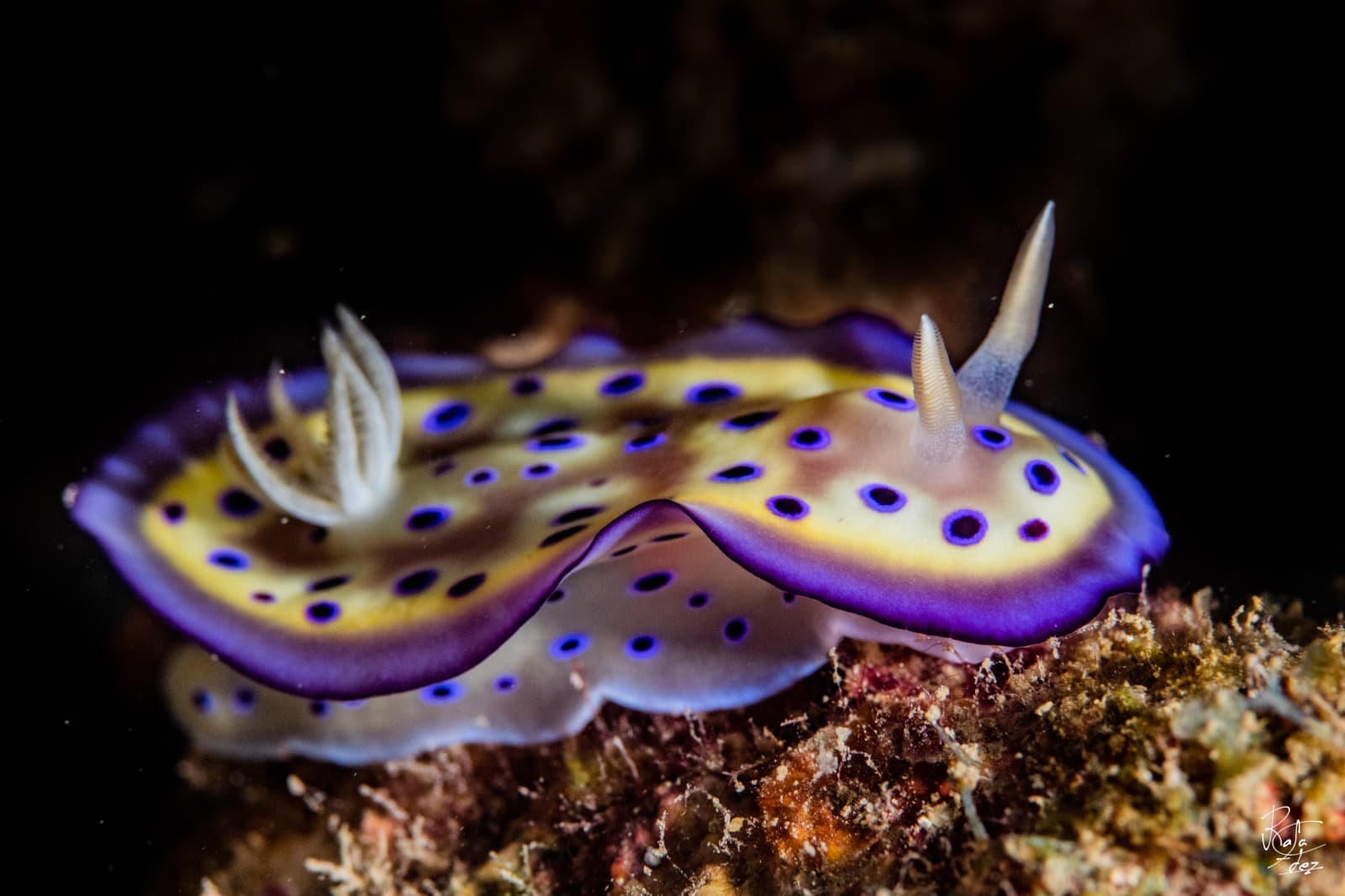
When the world’s best underwater photographers arrive in Pemuteran for the 2026 CMAS World Championship Underwater Photography & Video this October, many will be reaching for the same lens: the macro. There’s a reason. North-West Bali is one of Southeast Asia’s quiet giants of macro diving — a place where a single sandy slope can hold more nudibranch species than an entire reef elsewhere, and where the smallest creatures make the biggest impression.
If you’ve spent years chasing wide reefscapes and pelagic action, macro diving asks something different of you. Slow down. Look closer. The reward is a hidden world most divers swim straight past.
What makes Pemuteran a macro paradise
Macro diving — often called “muck diving” when the terrain is sand and rubble rather than coral — is about small, cryptic, extraordinary creatures. Pemuteran Bay is ideal for it. The water is calm and sheltered, currents are usually gentle, and many of the best critter sites sit in shallow, easy profiles perfect for long, patient dives with a camera.
Unlike the dramatic walls of nearby Menjangan Island, Pemuteran’s macro sites reward stillness. Visibility can vary, which is exactly why morning dives are best — and why sharp-eyed local guides matter so much. The difference between a good macro dive and a great one is usually the person pointing out the pygmy seahorse you would never have found alone.
The critters: what you will actually see
Pemuteran’s macro life reads like a photographer’s wish list:
- Nudibranchs — the headline act. These shell-less sea slugs come in every colour and pattern imaginable, and Pemuteran hosts a remarkable diversity of them. On the right site you can photograph several species in a single dive.
- Frogfish — masters of camouflage, from tiny juveniles to hand-sized giants, waiting motionless for prey.
- Seahorses and pygmy seahorses — including the thumbnail-sized pygmies that live on sea fans and test even experienced spotters.
- Ghost pipefish — ornate and robust varieties, drifting like scraps of weed.
- Cephalopods — cuttlefish, octopus, and if you are lucky, the mimic octopus and blue-ringed octopus.
- Shrimps and crabs — mantis shrimp, cleaner shrimp, decorator crabs and more, tucked into every crevice.
Best macro sites around Pemuteran
Pemuteran has seven dive sites, each with its own character. Two stand out for critter hunters:
- Agung Prana Reef — our top macro dive. A reef-restoration site that has matured into one of Pemuteran’s richest hunting grounds for small life, where patient divers with a macro lens are rewarded dive after dive.
- Bio Wreck — a purpose-sunk structure now thick with growth and crawling with critters. The kind of site where every ledge and shadow hides something worth photographing.
And for those who want to swing the other way with a wide-angle lens, two more of our seven sites deliver:
- Napoleon Reef — sweeping reef scenery built for wide-angle compositions.
- Biorock — the celebrated coral-restoration project, where electrified metal structures have grown into a thriving artificial reef. A living conservation story and a wide-angle photographer’s dream, with divers and marine life framed against the growing sculptures.
Together they cover the full photographic range — the reason Pemuteran suits every category a competition can throw at it.
The photography angle: why the pros are coming
Macro is where underwater photography gets technical and competitive. A wide-angle reef shot depends on light and scale; a macro shot depends on patience, precision and a subject the size of a fingernail. It is no accident that the 2026 CMAS World Championship — hosted here in Pemuteran by Karang Divers as Local Organising Committee, with PB POSSI and CMAS — features photography categories that live and die on exactly this kind of diving.
You do not need to be a competitor to shoot like one. Pemuteran’s calm, shallow, critter-rich sites are among the most forgiving places in the world to learn macro technique: stable positioning, time to compose, and subjects that (mostly) hold still.
When to come, and how to dive it
Pemuteran is diveable year-round, with the dry season (roughly April to November) offering the calmest conditions and best visibility. Macro diving, though, is less season-dependent than wide-angle — critters are there in every month, and some of the best muck diving happens when the water is a little greener.
Dive early. Bring a macro lens, or rent one. And above all, dive with guides who know where to look — in macro, local knowledge is everything.
Dive Pemuteran’s macro with Karang Divers
Whether you are building your critter portfolio or discovering muck diving for the first time, our team knows North-West Bali’s macro sites intimately. We dive them daily, we know where the season’s finds are hiding, and we will put you right in front of them. Compare our dive packages or plan a Menjangan Island day trip to round out your week.